This past year, in the heat of awards season, I received several questions regarding the difference between Oscar’s sound editing and sound mixing categories. I tried to answer those as best I could in the moment, but realized that it would be useful to do a more thorough examination, if only so that I would be prepared to point readers to it when the question arises again next year. More importantly, since most of you reading this are interested in the Oscars, (instead of, for example, a career in the sound world), I want to give you a way to think about these categories that is useful for making predictions.
But first, let’s understand why there is so much confusion. It is often said that that film is a visual medium, and I suspect that part of the challenge lies in the fact that a large number of film lovers simply prefer to focus on the visuals. That challenge is often heightened by the fact that many sounds accompany intense visual moments, so an excellent sounding explosion has to compete with the visual effects being shown at the same time. Finally, even when we do really listen, we may find ourselves enmeshed in the dialogue of the screenwriter or the music of the composer, rather than the elements that fit into these categories.
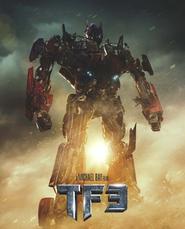
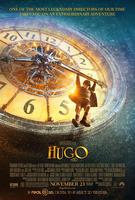
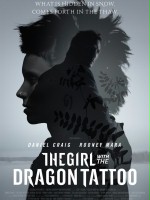
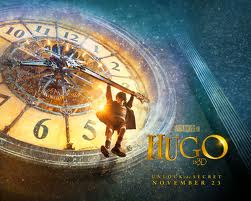
For those of us who are Oscar watchers, the fact that so many films are nominated in both categories also contributes to the confusion. This past year Hugo, The Girl With The Dragon Tattoo, War Horse and Transformers: Dark Of The Moon were all nominated in both categories, which makes for a lot of overlap. Indeed, over the past 20 years, only 19 films have been nominated for Sound Editing but NOT for Sound Mixing (an average of one per year). And over the past 6 years (when both categories went to an equal number of 5 nominees), 22 films have been nominated in both categories, which accounts for 73% of the nominations. So it is easy to understand why the casual observer might be led to assume that the awards must be for the same thing.
Luckily, this can actually help the Oscar prognosticator, since films with good sound are often nominated in both categories, and the exceptions can be better understood by learning a few simple guidelines.
Some Basic Definitions


Sound Editing is the creation and recording of new sounds, and the work that goes into cleaning up and perfecting individual sound elements. If you have ever seen Monty Python And The Holy Grail, then you know that the movies don’t actually place a microphone on a horse’s feet and make it run. Someone creates that sound in the studio (in this case, using hollowed out coconuts). Think how expensive it would be if every time you saw a thunderstorm in the movies, the entire cast and crew had to first find a location with a thunderstorm, and then run the lines a dozen times so that the lightning and thunder perfectly matched up with the dialogue--And then had to do it all over again to get a closeup shot!
This category was first implemented in 1963 under the name “Best Sound Effects.” Interestingly, that same year the Academy changed the name of the Visual Effects award to “Best Special Video Effects.” This connection in Oscar history can be helpful in keeping the sound categories distinct, since both the visual and audio impact is on creating something that didn’t (and sometimes couldn’t) exist before. However, just as visual effects can be used either to create fantasy locations or to create incredibly accurate and detailed depictions of our real world, sound editing is not limited to space monsters and explosions. They also handle mundane things like the sound of a door closing, make sure the actors’ dialogue tracks don’t contain outside noises, and record nature sounds and background noise so that the movie sounds like it was filmed on location instead of in a studio. The person who receives the Oscar for this category is the Supervising Sound Editor.
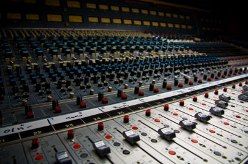


Sound Mixing, by contrast, refers to the way that sounds are “mixed” or layered upon each other. That thunder (which the sound editors created) needs to be loud enough that it doesn’t get drowned out by the musical score, but soft enough that you can still hear the dialogue. Maybe you are making a horror movie and you are coming up to the big scare. Is it better to have eerie music, or does silence make for a better build up? (Note that “silence” in film is often very noisy, and includes the wind blowing, the lights flickering, or just the barely audible sound of the actor’s breathing.) Sound Mixers are the ones who determine whether the music should end abruptly, or whether it should fade out (and if so, how quickly). And if you are watching a movie in surround-sound, it is the sound mixers who set it up so that the direction the gunfire is coming from matches up with what you see on the screen.
Up to four people can receive this award for any given film, and the people that receive it are the production mixer and up to three re-recording mixers. These individuals used to be called dubbing mixers, which can also help us to keep this category distinct, since dubbing is something that is done in post-production, as anyone who has seen a badly-dubbed Kung Fu movie can understand.
Clearly there is more to each of these jobs, and the pace of technology is changing the sound landscape immensely, with computers playing an essential role in both fields. However, these simple definitions give us enough information that we can now turn to your real question: What does it mean for the Oscars? While it is true that many films are nominated in both categories, there are some significant differences and trends that can help you to distinguish the two, particularly when we begin to analyze which films--and which genres of films--do better in one category over the other.




Sound Editing and the Oscars
When I am asked to give an example of Sound Editing (again, that is the creation of new sounds), the film that I immediately point to is Unstoppable. It didn’t win the sound editing Oscar, but it did receive its sole nomination in this category, and the created sounds are up front where everyone can hear them. Denzel Washington and Chris Pine are train conductors who deliver the action (and their dialogue) against a backdrop of chugging trains, squealing brakes, and screeching metal. You have train cars being unhitched, railway crossing signs, police sirens, gunfire, helicopters, whooshing air, broken glass, radio static and of course a train whistle or two. Oh, and there are also a few crashes and explosions thrown in for good measure. I invite you to close your eyes and just listen to the trailer for Unstoppable or better yet, listen to this anatomy of a scene from Unstoppable. As you are doing so, try to imagine all the individual sounds that had to be created.
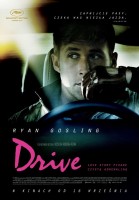
War films have traditionally done well in this category. Just think of all the bullets in The Hurt Locker, Saving Private Ryan, Pearl Harbor, or Letters From Iwo Jima. Summer blockbusters, action pictures, science fiction and superheroes can often excel here as well, from The Dark Knight to Tron: Legacy to Iron Man to Transformers. Some people complain that the Oscars focus too much on stuffy biopics, but the sound editing nominations provide a refuge for kick-ass movies, including fan favorites like Fight Club and Drive, both of which received their only nominations here.
Animated films have also done disproportionately well in this category, which makes sense when you remember that all of their sound has to be created on a soundstage. Sometimes they cross over into both sound categories (as is the case Wall-E, Ratatouille, The Incredibles, Polar Express and Aladdin), but there are a significant number who have received only the Sound Editing nod, including Toy Story 3, UP, Monsters, Inc. and Finding Nemo. By contrast, the probability that an animated film will receive a sound mixing nomination but not one for sound editing is extremely rare: It has only happened once since the sound editing category was created in 1963. That was for Beauty And The Beast, which I would argue fits more clearly into my argument below about musicals.
Before 2006, this category had up to three nominees, instead of the normal five. In the twenty years prior to that change, only 7 sound editing nominees were also nominated for best picture (12.5%), with 5 of them winning that prize (25% of the total, but 71% of best picture films that were nominated). As a result, an Oscar predictor could focus solely on merit during the nomination stage, knowing that the sound branch was likely to go their own way, while giving special attention to the best picture nominee in the few years that one was nominated here.
That advice may be changing, however, with the expansion of both the sound editing and best picture fields. From 2009 to 2011, the percentage of shared nominees jumped dramatically to 60%, with a best picture nominee also taking home the sound editing prize all three years.


Sound Mixing and the Oscars
One easy way to remember the difference between the two sound categories is to remember that Sound Mixing is where the Musicals go. (Notice that they both begin with “M”). Dreamgirls, Ray, Chicago, Cabaret, Fiddler On The Roof, Hello Dolly!, Oliver!, The Sound Of Music, My Fair Lady, West Side Story, South Pacific, The King And I, Oklahoma!, Yankee Doodle Dandy, Strike Up The Band, and San Francisco have all won the prize, while the list of nominees includes Moulin Rouge, Evita, A Chorus Line, Fame, A Star Is Born (1976), Funny Girl, Mary Poppins, Porgy and Bess, and Beauty And The Beast.
Significantly, none of the musicals listed above were even nominated in the sound editing category. Their accomplishment comes from the way the soundtracks “mix” together the music, lyrics, dialogue and (often) dance. The exception is Slumdog Millionaire, which was nominated in both categories, but only won for sound mixing, which confirms the point.
Historically, the sound mixing category has been perceived to be more closely related to the best picture race than the sound editing category has. Over the past 20 years, 39% of sound mixing nominees and 55% of sound mixing winners have also been nominated for best picture, a proportion which seemed huge compared to the sound editing statistics. The expanded best picture field brought the ratio up to 66%, a number that is similar to the newly expanded sound editing statistics.
But the real impact comes when we look at best picture winners. Over the past 20 years, 14 out of 20 (70%) best picture winners were also nominated for best sound mixing, while only 3 (15%) of those same best picture winners were nominated for sound editing. Statistically, a sound mixing nomination actually helps a film’s chances of winning best picture more than a best picture nomination helps its chances in the sound mixing race, with only 50% of the sound mixing winners also receiving a best picture nod over the same time period.
The perceived correlation between sound mixing and the best picture race may also come from the types of films that receive both nominations. The average audience member can easily understand why Inception, Jurassic Park or Saving Private Ryan would be up for sound awards, but they are probably relating more to the sound effects (or the volume) than to the careful mix of sound elements that this category actually recognizes. So try to remember that the sound branch experts do sometimes nominate quieter films with high profiles like The King’s Speech or Shakespeare In Love, and leave room for that possibility in your predictions.


Do Oscar Voters Know The Difference?
I have spent most of this article talking about the places where the categories diverge from one another, but for full disclosure I should remind you that many times the nominees, and even the winners, end up being the same. This makes sense, when you consider that a perfect sound effect may not matter if it doesn’t mix well with the score and dialogue, and that a perfectly mixed drama can fly under the radar if there is nothing flashy to make it stand out. Still, the correlation has led many to wonder whether the Academy can actually tell one category from another. We know that the nomination phase for the Oscars is decided by the individual branches, so of course the sound branch knows the difference between sound editing and sound mixing when they select their nominees. When it comes to picking the winner, however, there seems to be extra skepticism regarding how much other Academy members know about these categories.
A first look suggests that the Academy may know more than we give them credit for. In ten of the past twenty years (50% of the time), they have rewarded different films in the two different sound categories. Ray, Chicago and Dreamgirls fall into the musical analysis that I did above for sound mixing, and the choice to reward U-571 over Gladiator in the sound editing race suggests that they aren’t simply marking their entire ballots with best picture winners. They are, after all, in the business. Directors work with the sound professionals during filming and post-production, the actors have spoken into microphones before, the other members of the crew see the recording devices on the set, and all of them must have noticed that the final product sounds different than what they heard during filming.
Split winners of the past two decades:
Year
|
Sound Editing Winner
|
Sound Mixing Winner
|
65th Oscar
|
Bram Stoker’s Dracula
|
The Last Of The Mohicans
|
68th Oscar
|
Braveheart
|
Apollo 13
|
69th Oscar
|
The Ghost And The Darkness
|
The English Patient
|
73rd Oscar
|
U-571
|
Gladiator
|
74th Oscar
|
Pearl Harbor
|
Black Hawk Down
|
75th Oscar
|
The Lord Of The Rings: The Two Towers
|
Chicago
|
76th Oscar
|
Master And Commander: Far Side Of The World
|
The Lord Of The Rings: The Return Of The King
|
77th Oscar
|
The Incredibles
|
Ray
|
79th Oscar
|
Letters From Iwo Jima
|
Dreamgirls
|
81st Oscar
|
The Dark Knight
|
Slumdog Millionaire
|
On the other hand, however, nine of those ten years saw at least one of the awards going to a film that wasn’t nominated in the other category. Is it simply a coincidence that the splits happen in years when the one of the strongest candidates isn’t eligible in the other poll? Or is it a sign that they would have voted a straight ticket if they were able to? It may be easy to recognize that Letters From Iwo Jima focuses more on sound editing and Dreamgirls focuses more on sound mixing when each of them is only eligible in their own distinct categories.
The tie-breaker for me is the 81st Oscars, when The Dark Knight and Slumdog Millionaire were both eligible in each category, and the Academy voted The Dark Knight for best sound editing and Slumdog Millionaire for best sound mixing. That feels like the “right” division of labor to me. I’m not suggesting that I think every single member of the Academy understands the distinction, but rather I think that enough of them do so that the two awards still have meaning.
And for the rest of them, we can always hope that they’ll check out this page before they cast their next ballot!
I’ll be working on my Sound Editing and Sound Mixing predictions over the next few days, so check back to see which films I think will make the cut.
Return to predictions by year 84th, 85th, 86th, 87th, 88th, 89th
.